posted on 10/30/2026
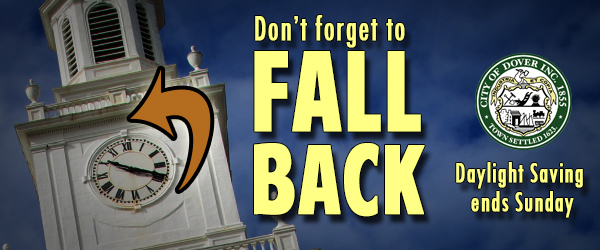 As clocks "fall back" at 2 a.m. on Sunday, Nov. 1, Dover Fire and Rescue encourages residents to use the end of daylight saving time to prioritize fire safety. The annual time change provides a convenient reminder to test smoke and carbon monoxide alarms and replace their batteries.
"Taking a few minutes this weekend to check your smoke and carbon monoxide alarms can truly save lives," Dover Fire Chief Brendan Driscoll said. "It's a small habit, but making sure your batteries are fresh is one of the easiest and most effective ways to protect your family and your home."
Dover Fire and Rescue reminds residents that nearly 80% of home fire fatalities involving children occur in properties without functioning smoke alarms.
"We could prevent so many of these tragedies if people simply tested their alarms and swapped out the batteries," Driscoll said. "Even if your home has hardwired alarms, they still rely on battery backups during unexpected power outages. Don't overlook them."
The National Fire Protection Association (NFPA) reports that 71% of smoke alarm failures are caused by missing, disconnected or dead batteries. Simple actions like testing alarms monthly, replacing batteries at least once a year and encouraging friends, family and neighbors to do the same can drastically reduce preventable injuries and fatalities.
"The risk of a fatal fire peaks overnight between 11 p.m. and 7 a.m. while most people are asleep," Driscoll noted. "A working alarm provides the crucial early warning needed to escape safely, especially for children and older adults who might need more time to evacuate."
According to the NFPA, having working smoke alarms cuts the risk of dying in a home fire by 60%.
Fire officials also advise residents to ensure alarms are properly placed inside every bedroom, outside each separate sleeping area and on every level of the home. Because the sensors degrade over time, the entire smoke alarm unit should be replaced every 10 years. Carbon monoxide detectors typically need replacing every five to seven years, depending on the manufacturer.
For additional information about smoke and carbon monoxide alarms, visit the U.S. Fire Administration website at usfa.fema.gov or contact Dover Fire and Rescue at 603-516-6148.