posted on 9/2/2026; updated 9/3/2026
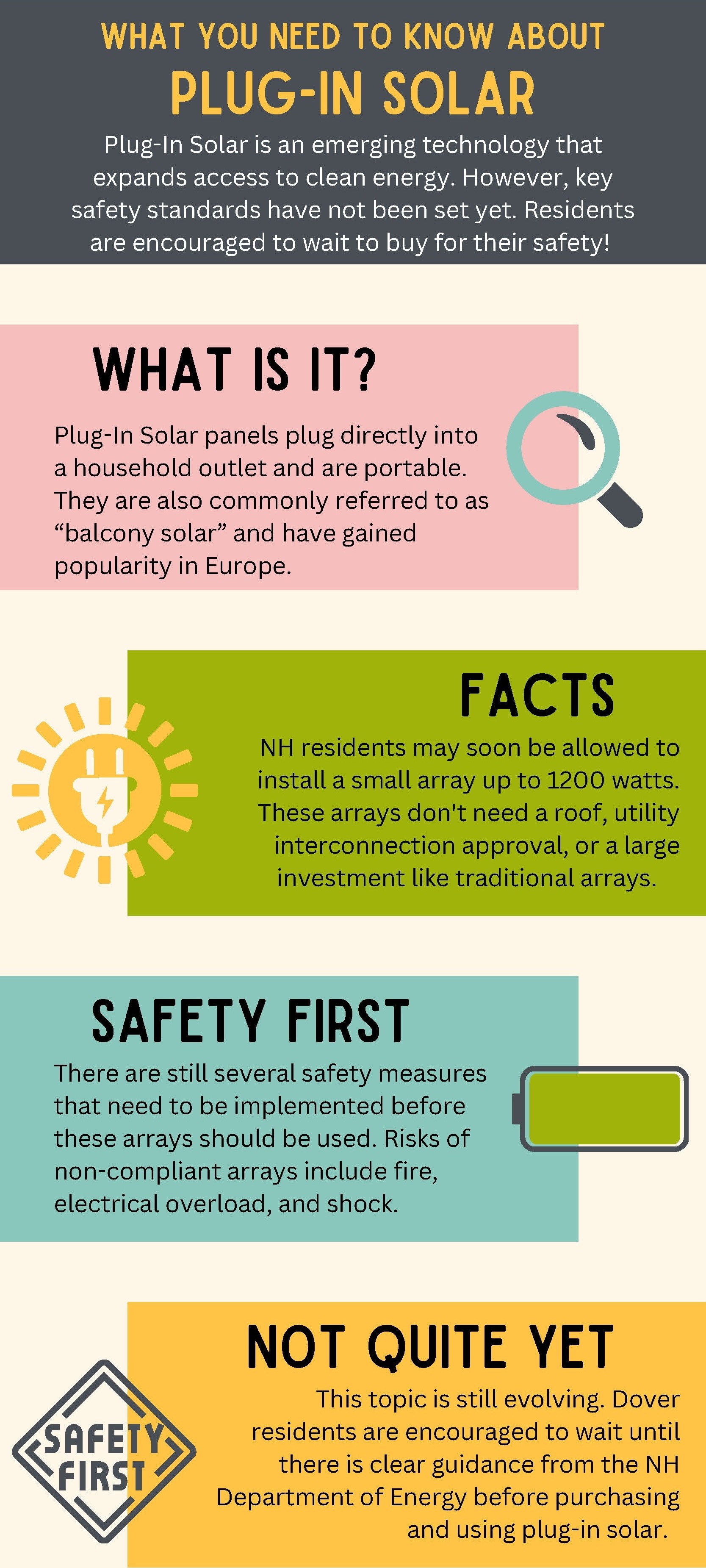 New Hampshire Gov. Kelly Ayotte recently signed into law legislation that will allow electricity customers to utilize plug-in solar generation systems — once state safety standards have been set. The Dover Energy Commission and the city’s electrical inspector urge the public to be cautious around the use plug-in solar products until these safety standards are established.
“This is a great idea, but there are a lot of concerns,” said Energy Commission Chair William Baber at the Commission’s Aug. 19 meeting. “It’s important for the well-being of our residents that they know the time is not quite right.”
Senate Bill 540, sponsored by Sen. David Watters of Dover and other bi-partisan legislators, would allow the residential use of a portable solar generation device that would plug into a regular, three-pronged electrical outlet, up to a maximum of 1,200 watts without the need to obtain approval from the customer’s utility or use a net-meter system. Electric distribution utilities are not liable for any damage or injuries created from portable solar generation devices, according to the law.
Part of the new law will go into effect on Jan. 1, 2027, but the actual use of such systems will not be legal until the Department of Energy first certifies there is a nationally recognized electrical standard for plug-in solar systems. Following the certification, the state’s building review board can then amend the state building codes to address plug-in solar generation systems, according to the Department of Energy.